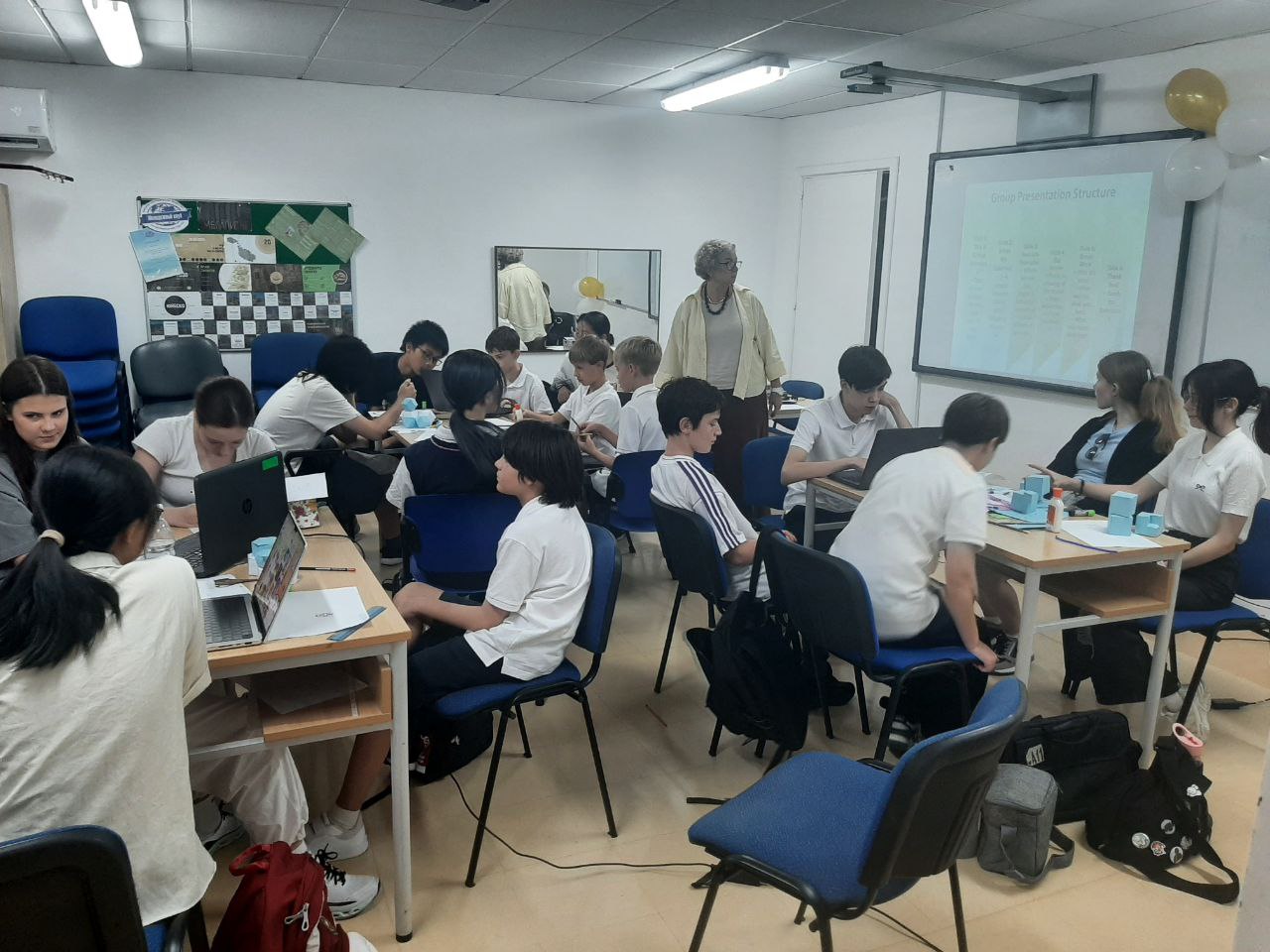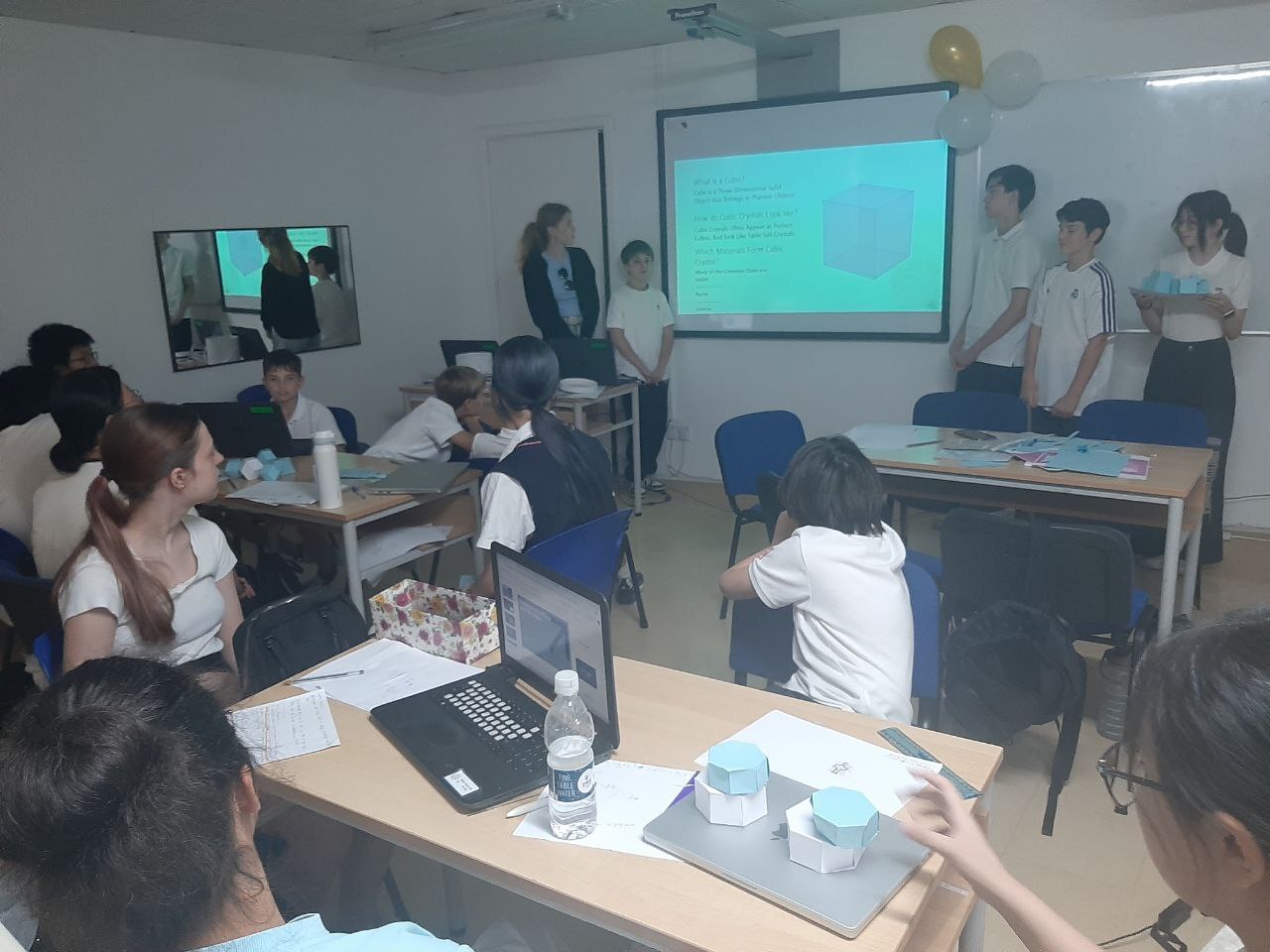
An integrated lesson in physics and mathematics was held at Malta Crown today.
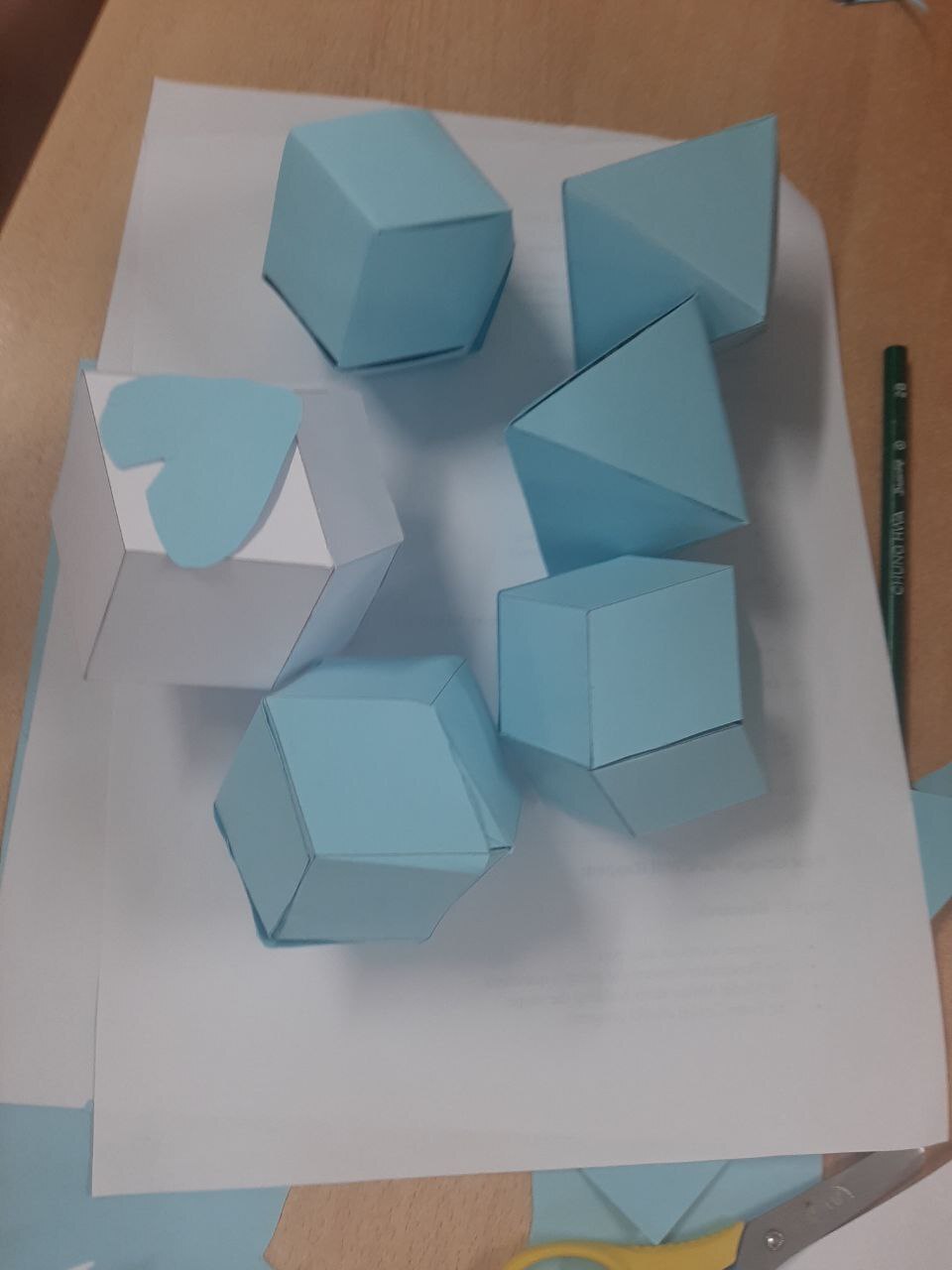
While studying the topic "Platonic solids and crystal lattices", the students got acquainted with the ideas of the ancient Greek philosopher Plato about ideal polyhedra and the discoveries of modern science proving their connection with crystal lattices forming the structure of the solids around us.
Integrated lessons help to see how different sciences complement each other, and mathematics and physics cease to be "dry" subjects and become the key to understanding the world around them.
It is important that the students gained experience working in groups during the lesson.
What was developed today:
Teamwork: we assigned roles and learned to hear each other.
Presentation skills: we practiced using a presentation creation program, spoke English, showed models, and explained what we had learned.
Research and critical thinking: we discussed where crystalline bodies meet in life, and drew conclusions about why nature "loves" regular shapes.
Such classes help children connect theory with practice, speak confidently in front of an audience and get a taste of real scientific research!
While studying the topic "Platonic solids and crystal lattices", the students got acquainted with the ideas of the ancient Greek philosopher Plato about ideal polyhedra and the discoveries of modern science proving their connection with crystal lattices forming the structure of the solids around us.
Integrated lessons help to see how different sciences complement each other, and mathematics and physics cease to be "dry" subjects and become the key to understanding the world around them.
It is important that the students gained experience working in groups during the lesson.
What was developed today:
Teamwork: we assigned roles and learned to hear each other.
Presentation skills: we practiced using a presentation creation program, spoke English, showed models, and explained what we had learned.
Research and critical thinking: we discussed where crystalline bodies meet in life, and drew conclusions about why nature "loves" regular shapes.
Such classes help children connect theory with practice, speak confidently in front of an audience and get a taste of real scientific research!